
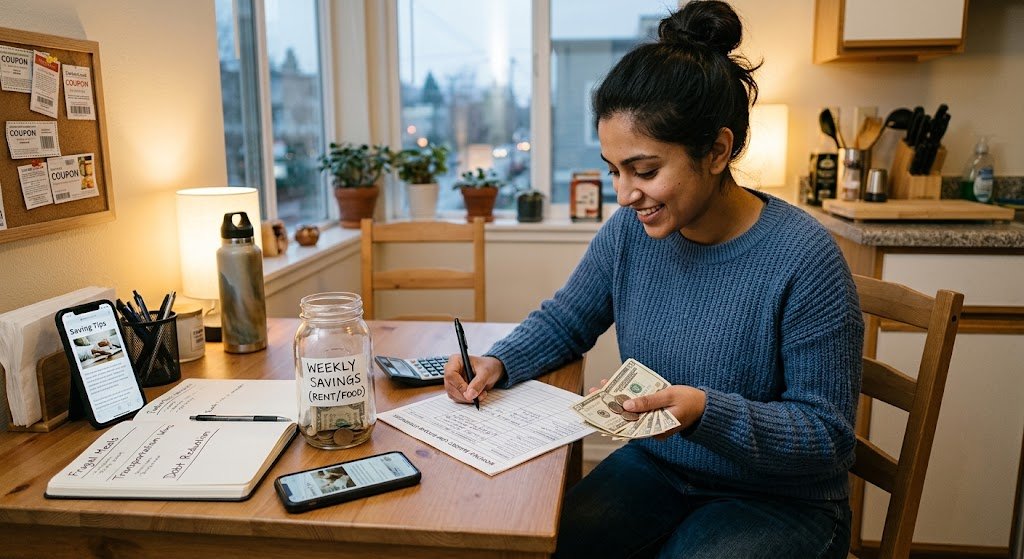
Saving money can feel difficult when your income is limited. After paying for rent, food, transportation, utilities, and other essential expenses, there may seem to be little or nothing left to put into savings. However, saving money on a low income is possible when you focus on realistic goals, control unnecessary expenses, and build consistent financial habits.
You do not need a high salary to start saving. Even small amounts can make a difference when you save regularly. The most important thing is to create a system that works with your current income instead of waiting for your financial situation to become perfect.
In this guide, we will explore practical ways to save money on a low income, reduce expenses, create a budget, avoid unnecessary debt, build an emergency fund, and improve your financial situation over time.
Why Saving Money on a Low Income Is Challenging
People with limited incomes often face a difficult financial balancing act. Most of their income may already be committed to essential expenses.
Common monthly expenses include:
- Housing
- Food and groceries
- Electricity and utilities
- Transportation
- Healthcare
- Education
- Debt payments
- Phone and internet bills
- Family responsibilities
When most of your income goes toward necessities, traditional savings advice can feel unrealistic.
The solution is not to completely eliminate everything you enjoy. Instead, focus on finding small opportunities to reduce spending and save consistently.
Even saving a small amount every week can help create a stronger financial habit.

1. Start With a Simple Budget
The first step toward saving money is understanding where your money goes.
Write down your total monthly income and list your expenses.
Divide your expenses into three basic categories:
Essential Expenses
These are costs you need to maintain your basic lifestyle, such as housing, food, utilities, transportation, and healthcare.
Important Financial Expenses
These may include debt payments, insurance, education, and savings.
Optional Expenses
These include entertainment, eating out, shopping, subscriptions, and other purchases that are not essential.
Once you categorize your spending, you can identify areas where adjustments may be possible.
A budget does not need to be complicated. A simple notebook, spreadsheet, or budgeting application can be enough.
2. Track Every Expense
One of the easiest ways to improve your finances is to track your spending.
For one month, record every purchase, even small ones.
You may be surprised by how much money goes toward small expenses.
For example, spending a small amount every day on snacks, drinks, delivery fees, or convenience purchases can become a significant monthly expense.
Tracking your spending gives you a clear picture of your financial habits.
At the end of each week, review your expenses and ask:
Was this purchase necessary?
Could I have purchased it for less?
Would I make the same purchase again?
These simple questions can help you become more conscious of your spending.

3. Save Before You Spend
When income is limited, it can be tempting to spend everything first and save whatever remains.
Unfortunately, there may be nothing left at the end of the month.
Instead, try paying yourself first.
As soon as you receive your income, move a small amount into savings.
It could be:
- $5
- $10
- $20
- $50
- Or another amount that fits your budget
The amount is less important than consistency.
If you receive $500 and immediately save $20, you know that $20 is protected from unnecessary spending.
Over time, this habit can become automatic.
4. Create a Separate Savings Account
Keeping your savings separate from your everyday spending account can make saving easier.
When your savings and spending money are mixed together, it may be difficult to know how much you can actually afford to spend.
A separate savings account creates a psychological barrier between your money and your daily expenses.
You can also give the account a specific purpose, such as:
Emergency Fund
Future Expenses
Education
Home
Business
Having a clear purpose can make it easier to stay motivated.
5. Reduce Food Expenses
Food is an essential expense, but there are often ways to reduce its cost.
One of the most effective strategies is meal planning.
Before going grocery shopping, create a list of meals you expect to prepare during the week.
Then purchase only the ingredients you need.
Cooking at home can also reduce the cost of restaurant meals and food delivery.
Other strategies include:
- Compare prices before buying
- Purchase seasonal produce
- Buy commonly used items in suitable quantities
- Reduce food waste
- Use leftovers
- Prepare meals in batches
- Avoid shopping when hungry
You do not need to completely stop eating outside. Instead, make restaurant meals an occasional expense rather than a regular habit.
6. Cancel Unused Subscriptions
Subscriptions can quietly consume part of your monthly income.
Review your recurring payments and look for services you rarely use.
These may include:
- Streaming services
- Apps
- Gaming subscriptions
- Fitness memberships
- Software
- Premium websites
- Cloud storage plans
If you are paying for five subscriptions but regularly use only two, consider canceling the others.
Even saving $10 or $20 per month can make a meaningful difference over a year.
7. Avoid Impulse Purchases
Impulse buying can be especially damaging when your income is limited.
A useful strategy is to create a waiting period before making non-essential purchases.
For inexpensive items, wait until the next day.
For expensive purchases, consider waiting several days or even a few weeks.
During the waiting period, ask yourself:
Do I actually need this?
Do I already own something similar?
Will this purchase improve my financial situation?
Can I afford it without using debt?
Often, the desire to purchase something disappears after you have had time to think about it.
8. Use Cash or Spending Limits
If you regularly overspend using a debit or credit card, setting a specific spending limit can help.
For example, you might decide that you have a fixed amount available each week for optional expenses.
Once that amount is gone, you stop spending in that category until the next week.
This can make your budget easier to follow.
The goal is not to make your life unnecessarily restrictive. It is to create boundaries that prevent small purchases from becoming a large monthly problem.
9. Reduce Transportation Costs
Transportation can be a major expense, particularly for people who commute frequently.
Look for ways to reduce transportation costs where practical.
Depending on your situation, you might:
- Use public transportation
- Carpool
- Walk for short distances
- Combine multiple errands into one trip
- Maintain your vehicle regularly
- Compare fuel prices
- Avoid unnecessary trips
If you are considering buying a vehicle, calculate the total cost rather than only the purchase price.
Remember to consider fuel, maintenance, insurance, repairs, registration, and other ongoing expenses.
10. Avoid High-Interest Debt
Saving money becomes much harder when a large portion of your income goes toward interest.
Credit card balances and other high-interest debt can become particularly expensive if they are not paid down.
Start by listing your debts and their interest rates.
Then consider focusing extra payments on the debt with the highest interest rate while maintaining required payments on other debts.
Reducing expensive debt can eventually free up money that can be redirected toward savings.
If your debt situation is complex, consider seeking advice from a qualified financial professional or reputable debt counselor.
11. Build a Small Emergency Fund
Even with a limited income, having some emergency savings can provide valuable protection.
You do not need to immediately save several months of expenses.
Start with a small target.
For example:
Goal 1: $100
Goal 2: $250
Goal 3: $500
Goal 4: One month of essential expenses
Long-term goal: Several months of essential expenses
The appropriate amount depends on your financial situation.
An emergency fund can help you handle unexpected expenses without immediately relying on expensive debt.
12. Find Ways to Increase Your Income
Cutting expenses is useful, but there is a limit to how much you can reduce.
Increasing your income can provide additional opportunities to save.
Depending on your skills and circumstances, consider:
- Freelancing
- Online services
- Part-time work
- Selling unused items
- Tutoring
- Delivery work
- Creating digital products
- Starting a small business
- Learning a new professional skill
Even a modest increase in monthly income can make a difference if you avoid immediately increasing your lifestyle expenses.
For example, if you earn an additional $100 per month, you could put part of it toward savings and use the rest for another financial priority.
13. Use Extra Income Carefully
Occasional extra income can be an opportunity to accelerate your financial progress.
You might receive:
- A bonus
- A gift
- Freelance payment
- Tax refund
- Money from selling something
- Additional work income
Instead of spending all of it, consider dividing it between different priorities.
For example:
50% → Savings
30% → Debt repayment
20% → Personal spending
These percentages are only an example. Choose a system that fits your circumstances.
The important thing is to avoid automatically spending every unexpected dollar.
14. Buy Used When Appropriate
Buying second-hand items can sometimes reduce expenses significantly.
Consider used products for items such as:
- Furniture
- Books
- Clothing
- Appliances
- Electronics
- Tools
However, always consider quality, safety, warranty, and expected lifespan.
A cheap product that needs immediate replacement may not actually save money.
Focus on value rather than simply choosing the lowest price.
15. Compare Prices Before Major Purchases
Before making an expensive purchase, compare prices from multiple sellers.
Look at:
- Product price
- Delivery costs
- Warranty
- Quality
- Reviews
- Return policy
- Long-term maintenance costs
A slightly more expensive product may sometimes offer better value if it lasts significantly longer.
Avoid making large purchases simply because something is discounted.
A discount only saves money if you actually needed the item.
16. Set Specific Savings Goals
Saving becomes easier when you have a clear reason.
Instead of saying:
“I want to save more money.”
Set a specific goal:
“I want to save $500 for emergencies within six months.”
Then calculate how much you need to save each month.
For example:
$500 ÷ 6 months = approximately $84 per month.
If $84 is too difficult, extend the deadline.
The goal should challenge you without making your budget impossible to maintain.
17. Make Saving Automatic
Automation is one of the simplest ways to stay consistent.
If your bank allows automatic transfers, schedule a transfer shortly after receiving your income.
For example, you could automatically transfer $20 every payday into your savings account.
Because the transfer happens automatically, you do not need to remember to save.
As your income increases, consider increasing the automatic transfer.
18. Avoid Lifestyle Inflation
When your income increases, it can be tempting to immediately increase your spending.
You may move into a more expensive home, buy a newer vehicle, upgrade your phone, or increase entertainment expenses.
This is known as lifestyle inflation.
Instead of spending the entire increase, consider dividing it.
For example, if your monthly income increases by $200, you might save $100 and use the remaining $100 to improve your lifestyle.
This allows you to enjoy your increased income while continuing to build financial security.
19. Review Your Budget Every Month
Your budget should change as your life changes.
Review it every month and look for areas that need adjustment.
Ask yourself:
- Did I stay within my spending limits?
- Where did I overspend?
- How much did I save?
- Did my income change?
- Can I reduce any recurring expenses?
- What is my biggest financial priority next month?
A monthly review helps turn money management into a regular habit.
Common Mistakes to Avoid
When trying to save money on a low income, avoid these common mistakes.
Trying to Save Too Much Too Quickly
An unrealistic savings target can make you frustrated and cause you to abandon your plan.
Ignoring Small Expenses
Small purchases can add up significantly over time.
Using Credit to Maintain Your Lifestyle
Borrowing money for non-essential purchases can create long-term financial pressure.
Not Having a Budget
Without a spending plan, it can be difficult to know where your money is going.
Comparing Yourself With Others
Social media can make other people’s lifestyles appear easier or more luxurious than they really are.
Focus on your own financial progress.
A Simple Low-Income Savings Plan
If you want to start today, follow these steps:
Step 1: Calculate your monthly income.
Step 2: List all essential expenses.
Step 3: Track every purchase for 30 days.
Step 4: Identify three expenses you can reduce.
Step 5: Choose a small monthly savings target.
Step 6: Create a separate savings account.
Step 7: Automate your savings contribution.
Step 8: Build a starter emergency fund.
Step 9: Work on reducing expensive debt.
Step 10: Look for opportunities to increase income.
Step 11: Review your progress every month.
Step 12: Increase your savings target as your financial situation improves.
Frequently Asked Questions
Can I save money if my income is very low?
Yes. It may be difficult, but starting with a very small amount can help you develop the habit. Focus on realistic savings targets and look for ways to reduce unnecessary expenses.
How much should I save every month?
There is no universal amount. Save whatever you can consistently afford while still covering essential expenses. Increase the amount when your income or financial situation improves.
Should I pay debt or save money first?
Many people benefit from maintaining a small emergency reserve while prioritizing high-interest debt. Your specific strategy should depend on the type and cost of your debt and your financial circumstances.
What is the easiest way to save money?
Tracking expenses, reducing unnecessary recurring costs, and automatically transferring a small amount into savings are among the simplest strategies.
How can I stay motivated to save?
Set specific goals and track your progress. Saving for a clear purpose, such as an emergency fund, education, home, or future purchase, can make the process more motivating.
Final Thoughts
Learning how to save money on a low income is not about making your life miserable or eliminating every enjoyable expense. It is about making intentional decisions with the money you have.
Start by creating a simple budget and tracking your expenses. Identify unnecessary spending, reduce recurring costs, avoid impulse purchases, and automate even a small amount of savings.
At the same time, look for opportunities to increase your income and reduce expensive debt.
You may not be able to save a large amount immediately, and that is okay. Financial progress does not happen overnight. What matters is building consistent habits that gradually improve your financial position.
A small amount saved today can become a larger financial cushion in the future. Start with what you can afford, remain consistent, and increase your savings whenever your financial situation allows.
The goal is not to save perfectly. The goal is to save consistently and build a stronger financial future one step at a time.